The Future of Cultural Policy Lies Beyond the Pillars
My name is Kelly Drummond Cawthon. I am a choreographer, director and multidisciplinary artist based in Lutruwita/Tasmania, and the Creative Director of Second Echo Ensemble.
I am writing as both an independent artist and someone who has spent more than a decade developing long-term artistic practice within disability-led, neurodivergent and regional arts contexts.
Revive has repositioned arts and culture within national conversation, recognised artists as workers, and acknowledged culture as essential to Australia’s social and economic future.
The next National Cultural Policy now has an opportunity to go further by reconsidering not only how culture is funded, but how it is understood.
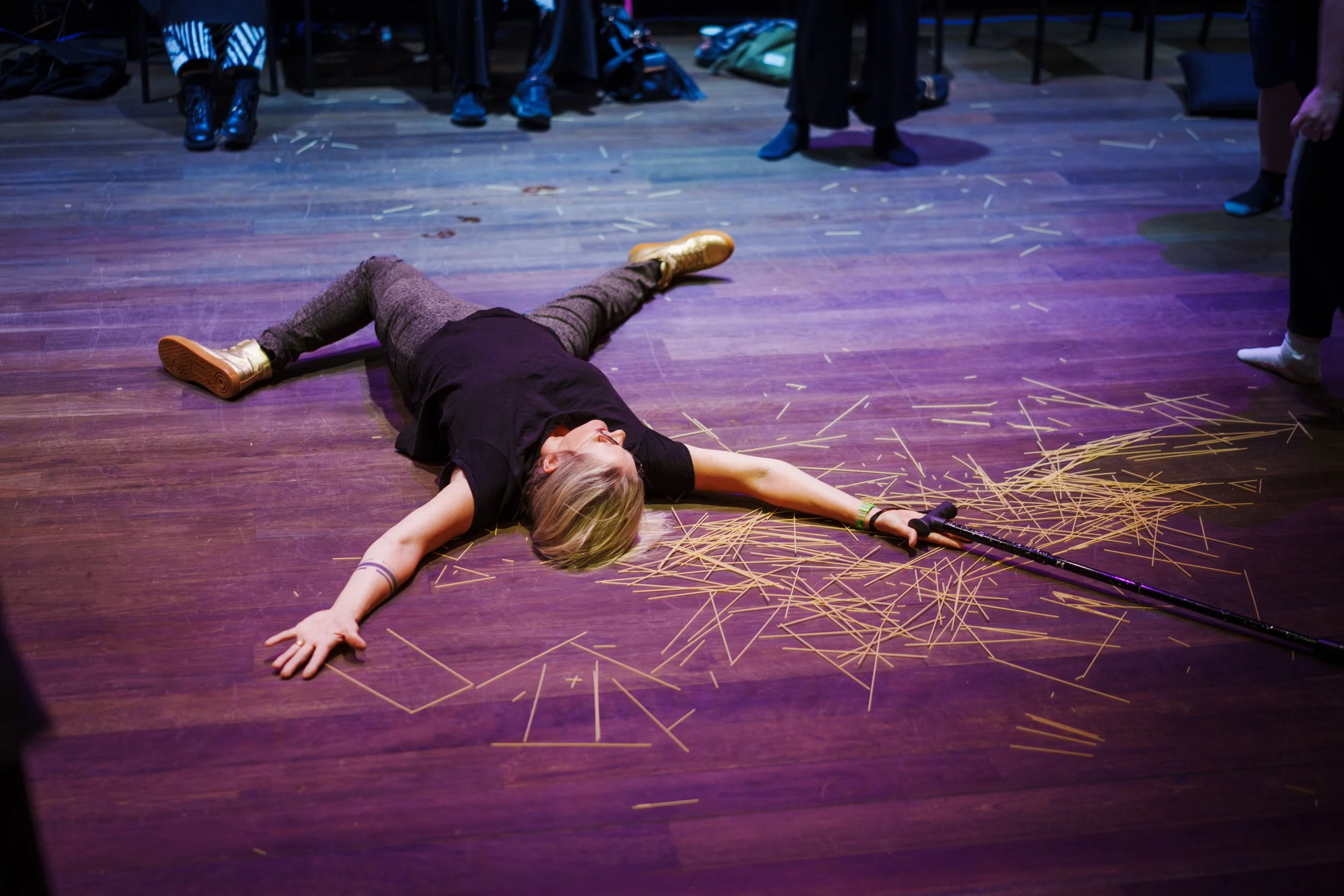
SEE Creative Director, Kelly Drummond Cawthon leads a workshop with participants at the 2026 Arts Tasmania Barriers to Belonging conference. Photo by Steve Battese
Too often, the arts are framed adjacent to entertainment, measured through outputs and audience metrics. This limits the role culture can play within national life. Culture is not simply content production. It is one of the primary ways humans make meaning, build memory, imagine futures and understand each other. Artistic practice constantly intersects with health, education, science, disability, community development and civic life, even when policy settings continue to treat these areas as disconnected.
In regional Tasmania, the boundaries between sectors are rarely clean. Artists often work across arts, disability, health, education and community contexts because scale, sustainability and survival demand it. This reveals how interconnected these systems already are, despite policy structures that continue to treat them separately.
I believe the next policy must move from segmented pillars toward ecological thinking. Culture does not operate in separate lanes. Artists, audiences, communities and institutions are interconnected, while cultural practice itself is fluid, adaptive and relational.
The arts should be positioned alongside science, health and education as a way of knowing. Artists work with complexity, uncertainty and human experience. Studios operate as laboratories. Communities become sites of inquiry. Process itself becomes a form of research.

SEE Creative Director, Kelly Drummond Cawthon performs an excerpt from Relâche: The Last Dance on Earth with the Ensemble at the 2026 Arts Tasmania Barriers to Belonging conference. Photo by Laura Purcell
Many of the most adaptive and interdisciplinary practices now shaping contemporary culture have emerged from communities historically excluded from traditional systems. These practices move across disability arts, community practice, social engagement and digital culture, yet policy structures do not always recognise this complexity well.
Disability-led and community-led practice may hold some of the methodologies needed for the future of culture itself. These approaches are relational and responsive because they have had to be. They are not peripheral to the future of culture. They can help define it.
This kind of work also requires time. Transformational practice rarely happens within short project cycles. It emerges through sustained relationships, trust, experimentation and continuity, particularly in regional communities with limited infrastructure and visibility.
The future will not belong to systems that separate participation, leadership and authorship into different tiers. It will belong to systems capable of holding difference, interdependence and leadership, where people shape culture together rather than entering it through hierarchies of value.
Creative capability is not separate from national capability. Without imagination there is no innovation. Without culture there is no future workforce capable of navigating complexity.
Between 23 March 2026 and 24 May 2026, Australians were invited to share their views and help guide the next National Cultural Policy. Public submissions, including this one can be viewed here.
Read the full submissions from Second Echo Ensemble and Elise Romaszko.