
Looking Up: What the Stars Remember on the North West Coast
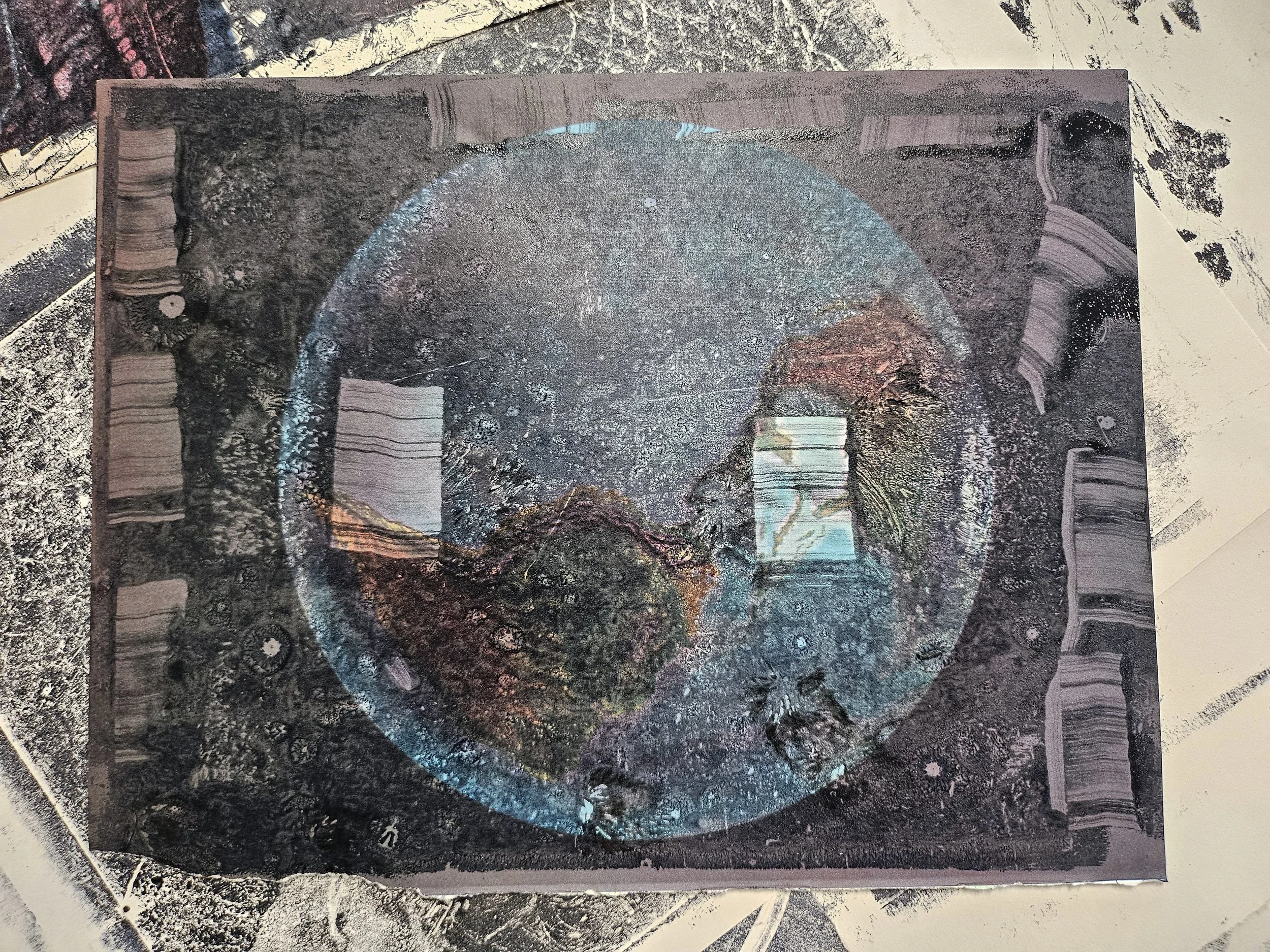
From 14 to 19 August 2026, a small Second Echo Ensemble team travelled up the North West Coast of Lutruwita/Tasmania spend six days exploring for the next stage of What the Stars Remember.
Based in Ulverstone, we moved between theatres, galleries, studios, planetariums, farms, the beach and stood under the night sky.
We met with astronomers, artists, technicians and presenters. At Hive, we experienced Phantom of the Universe, The Universe Through All the Senses and Sound in Space, and considered the waysscience can become story, sensation, sound and bodily experience.
We visited Burnie Arts, Leven Theatre and paranaple arts centre, and spoke with Ten Days on the Island about making and presenting work across regional Lutruwita/Tasmania.
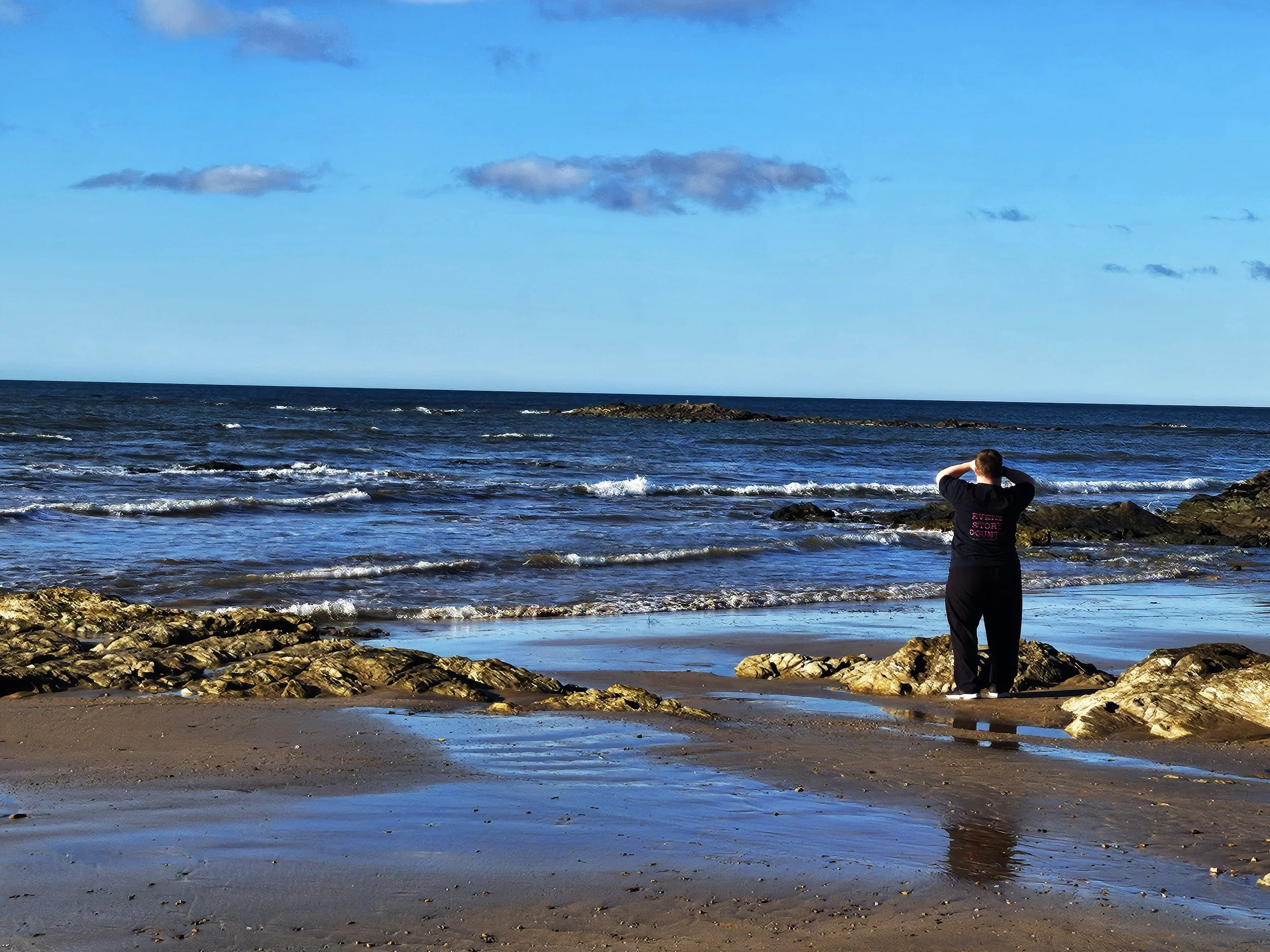
One of the ideas that stayed with us came from Hive astronomer, Dr Martin George when he spoke about the sensation of lying on the ground beneath the night sky and feeling as though you might be falling into the bowl of night.
This is exactly the sensation we want to explore inside the dome.
To lie back and lose the floor a little. To feel the horizon around you. To be held by a space while simultaneously sensing how vast everything beyond it is.
Our astronomy research also kept bringing us back to the slippery relationship between what we see, what we feel and reality.
The Moon appears enormous on the horizon, even though its measured size is slightly smaller there than when it is higher in the sky. Invisible matter can reveal itself through gravity. Light bends around mass. A field we cannot see extends throughout the universe and helps give fundamental particles mass.
At the Large Hadron Collider, particles collide at extraordinary speeds while scientists look for evidence of things that may be invisible to their detectors.
The science was not making the universe simpler – it was making it stranger, and that felt important.
At Mount Gnomon Farm and Under Tasmanian Skies, the research moved out of the controlled environment of the planetarium and into darkness, weather, landscape and waiting.
What changes when we stop looking at an image of the universe and simply look up?
Throughout the week, another question kept returning:
What does access mean if it is part of the artwork from the beginning?
We looked closely at the barriers built into existing venues and systems, but also at what makes a space feel generous, regulating, curious and safe.
For What the Stars Remember, access cannot be a checklist added once the design is finished. The dome needs to work differently. It needs to hold people without trapping them. It needs to offer clear information without prescribing a right way to participate, allowing participants to respond instinctually – lying down, moving, listening, weaving, watching, resting and simply being there.
We began thinking about captioning not only as text at the bottom of a screen, but as language moving through space. How might Elise’s improvised poetry appear and disappear around an audience? When does every word matter, and when might language become another material inside the work?
We thought about the audience being given permission not to keep up and understand everything. Not to worry about where they should be next.
Maggie described wanting the suspended mobile to move almost hypnotically, allowing people to watch without having to make a decision. Elise imagined her poetry making people feel as though they were floating away.
The science began feeding directly into the performance language.
Elise might create a gravitational field that bends Alex’s light around her.
A translucent mesh might suggest the invisible Higgs field that extends throughout the universe.
Moving screens might become dark energy, continually changing distance and pulling things apart.
The audience-made stars and woven lines become our human attempt to make patterns across enormous distances. Drawing lines between things creates connection and helps us find our place.
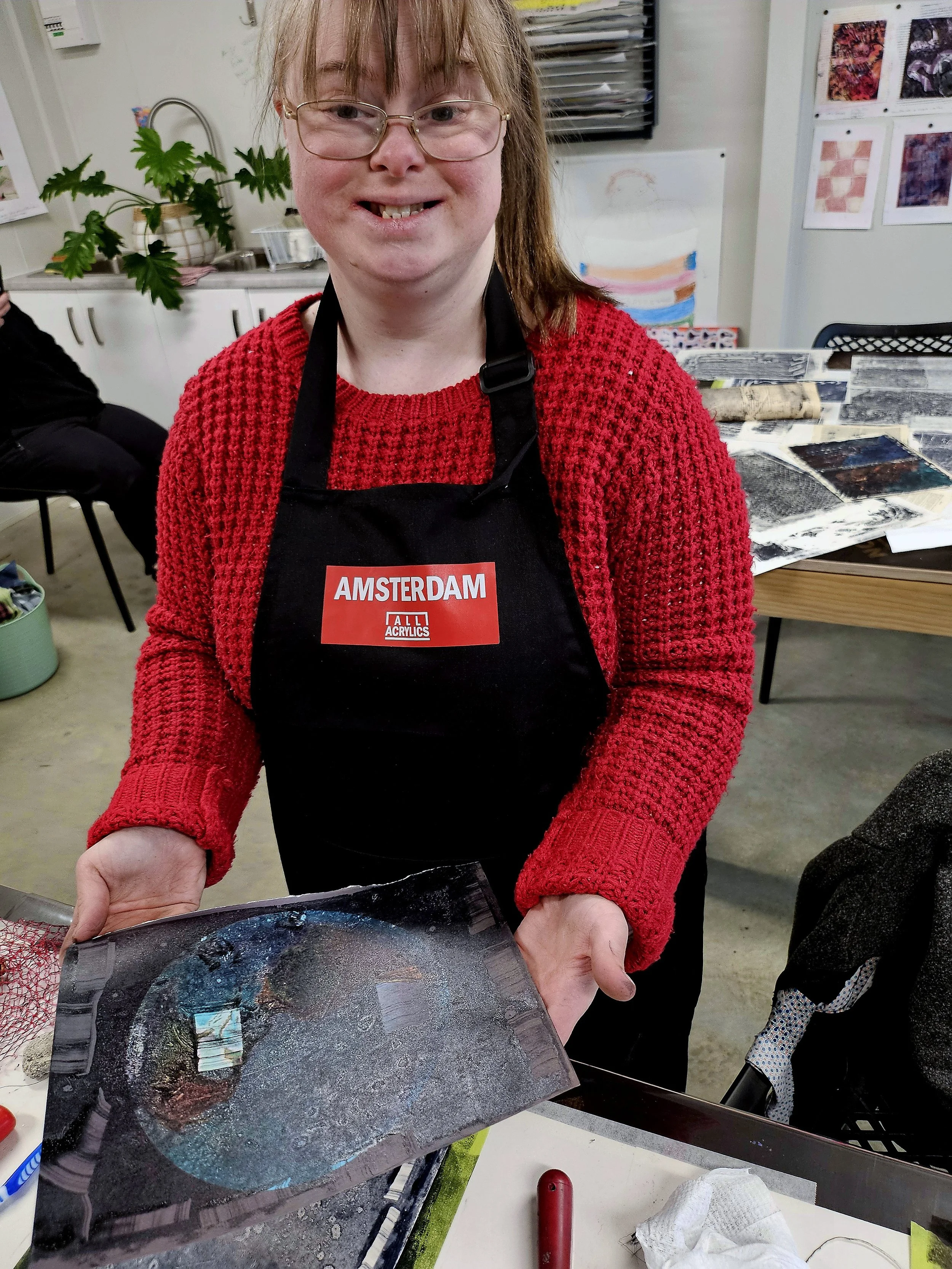
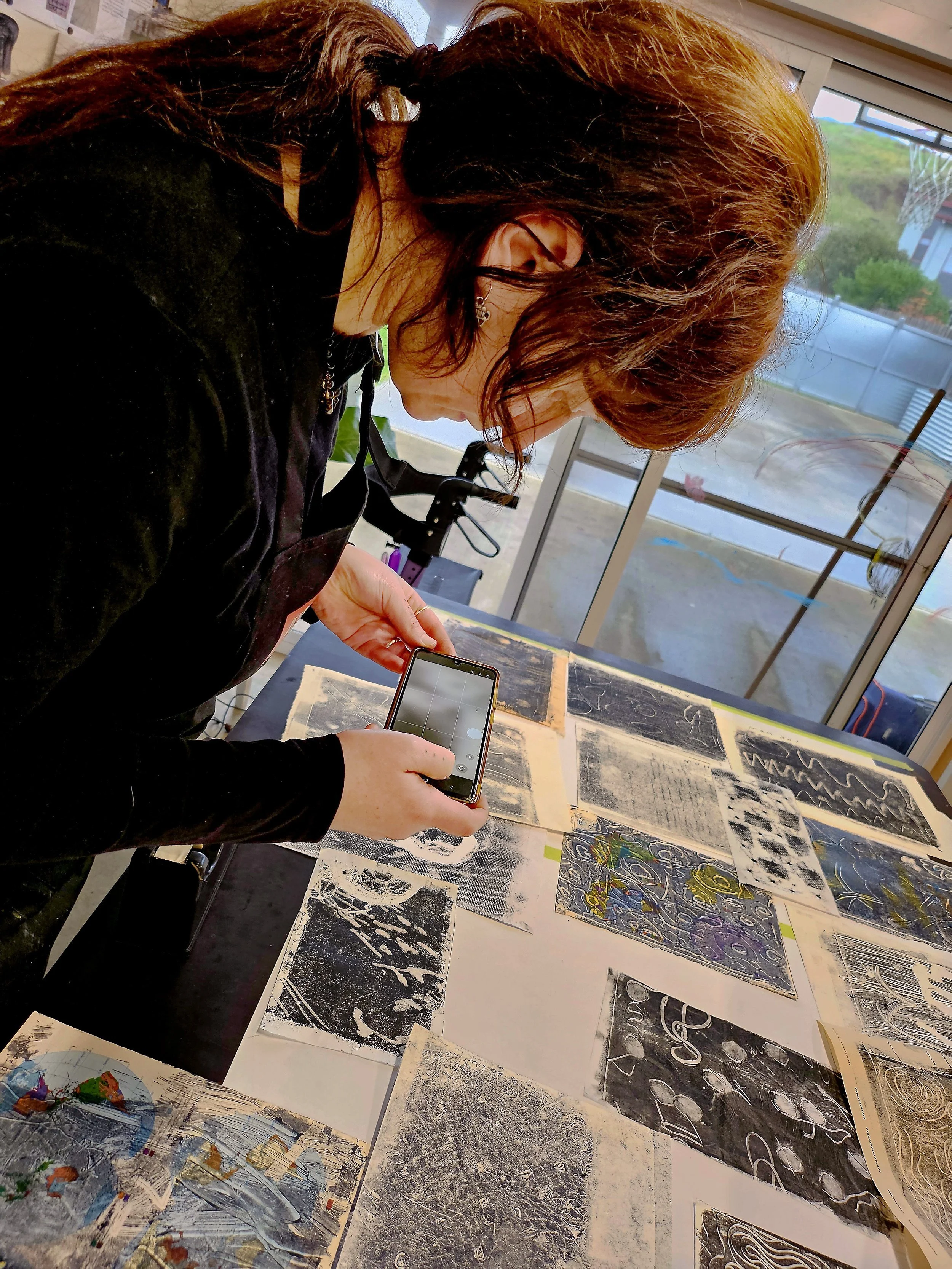
Workshops with North West Support Services and an artist exchange with REBL+SHY brought those ideas back to making, including weaving stars, sharing memories and imagining messages we might send into the future.
The trip also sharpened some very practical questions:
How can the work tour without transporting an entire building around Australia? Could standard scaffolding be hired locally wherever the work goes? What needs engineering certification? How much structure can travel flat? How can projection, sound, seating, access and sensory regulation all be considered as part of the same design?
Somewhere between planetariums, particle collisions, radio signals, weaving, poetry and the night sky, the universe of What the Stars Remember became clearer.
Not because we suddenly understood everything, perhaps the opposite.
The work is becoming a place where we can let go of needing to understand everything, slow down and linger for a while in the vastness of things.
A place to remember that we are tiny, temporary and deeply connected.
For a moment, perhaps, we can simply look up.