
Blue Genes
Wear the change
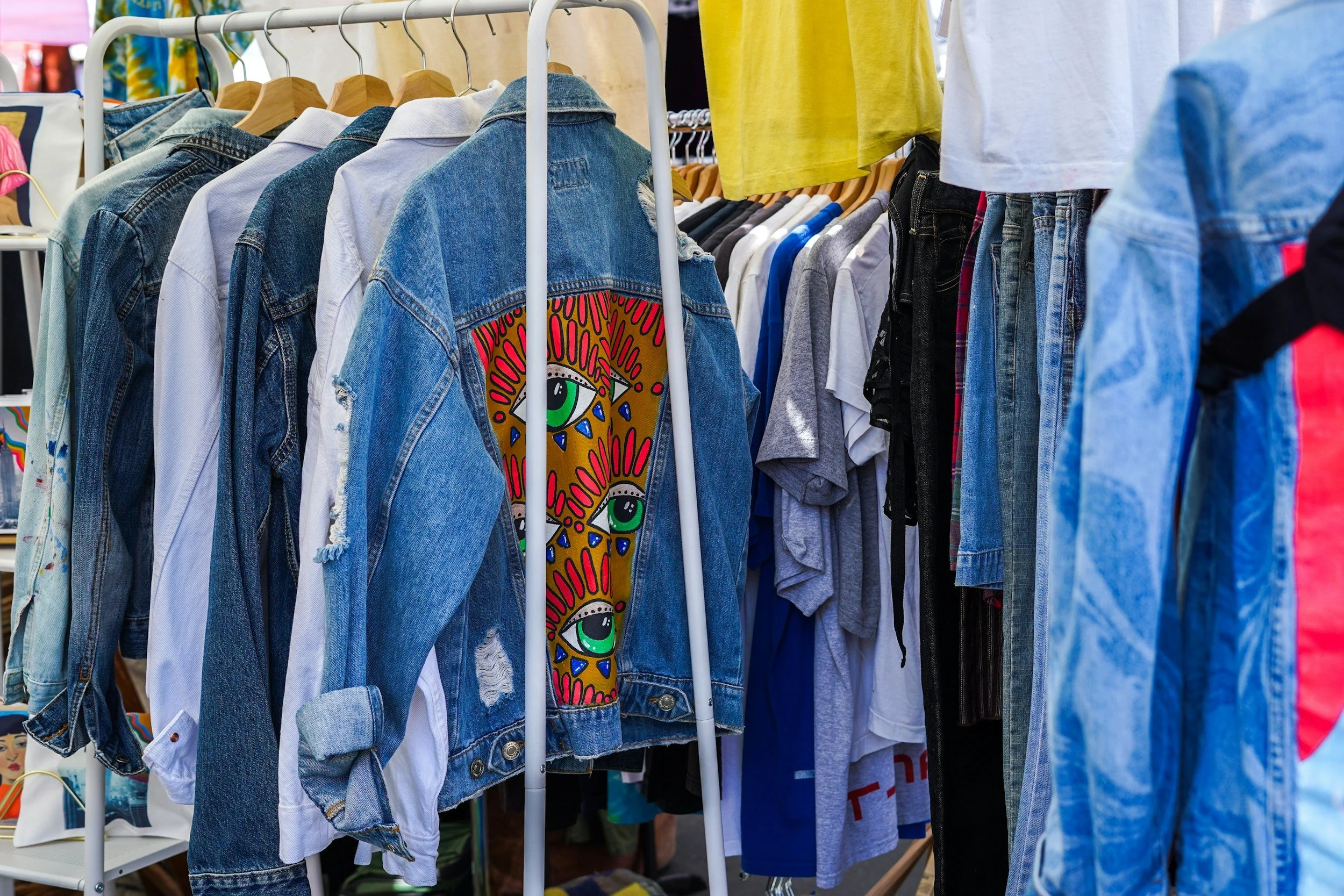
Blue Genes is Second Echo Ensemble’s wearable art initiative turning textile waste into one of a kind fashion. Discarded denim, headed for landfill, is transformed into hand painted, artist designed works you can wear. Every piece is custom fit, sustainably made, and unapologetically expressive.
This is slow fashion with backbone. Blue Genes reduces waste, supports inclusive employment, and celebrates neurodivergent creativity.
Each commission comes with a pair of curated odd socks, a playful nod to the chromosome shaped symbol of Down syndrome pride and a reminder that difference is not something to fix. It is something to flaunt.
Old jeans become new stories. Jackets, jeans, and double denim dreams are reworked with care, colour, and rebellious joy. No copies. No fast fashion. Just you.
Blue Genes is both personal and political. It is wearable art that makes visible what inclusive, artist-led practice can look like when sustainability and creativity are treated as inseparable.
Designer Commissioning Brief
Expressions of Interest
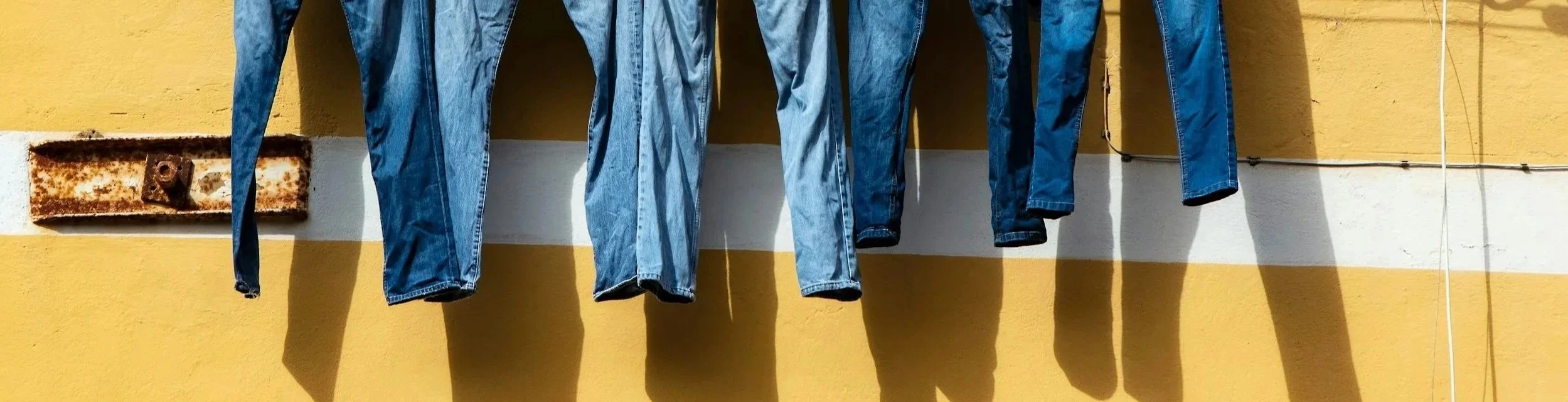
Second Echo Ensemble, in collaboration with Design Tasmania, is commissioning two designers to work alongside the Ensemble across a series of in-studio and external workshops and urban activations, to explore possibilities for creative repurposing and rethinking of denim.
Applications close at midnight on Sunday 6 September 2026.
-
Blue Genes: Denim in Action – Reimagining Textile Waste in Hobart is a sustainability project that uses creative practice as a tool to address textile waste and its impact on climate and community.
The global fashion industry generates over 92 million tonnes of waste annually, and Australians are among the highest textile consumers per capita globally. Much of this waste is driven by systems of mass production that prioritise standardised bodies, resulting in poor fit, underuse, and early disposal.
Blue Genes responds through a public, action-based research process. Led by Second Echo Ensemble in collaboration with Design Tasmania, the project will begin with an open call and selection process to engage two Hobart-based designers. Together with SEE artists, they will work with reclaimed denim and locally sourced textile waste to test how discarded materials can be reused, reconfigured, and extended in life.
Through studio workshops, partner exchanges, and public activations in Hobart, participants will explore how denim can move beyond clothing into structure, surface, and spatial use. The project focuses on designing with real bodies and diverse access needs, recognising that sustainability and inclusion are interconnected.
This includes workshop and exchange activity with Material Institute and the Sustainability Learning Centre, alongside public activations in Bidencopes Lane in partnership with Vibrance Projects and in Elizabeth Street Mall. These sites operate as temporary public environments for making, participation, and performative engagement, inviting audiences to encounter textile waste and contribute to its transformation.
Blue Genes will result in a clear framework for future development, demonstrating how inclusive design and circular material practices can contribute to a more sustainable and connected Hobart community. -
This commission is exploratory. Designers are not expected to arrive with a predetermined solution or finished product. The work will emerge through shared research, material testing and collaboration.
The designers will work alongside SEE artists through a series of collaborative action research workshops. Action research means making, testing, reflecting and adapting together. Denim will be the central material, and all participants will work with a shared set of research questions exploring textile waste, material transformation, diverse bodies, access and public space.
The designers will also participate in exchanges with Material Institute and the Sustainability Learning Centre. Learning from the studio workshops and partner exchanges, each designer will develop material experiments, design explorations and prototypes using reclaimed denim.
These explorations will contribute to two public activations in central Hobart:
Bidencopes Lane, in partnership with Vibrance Projects
Elizabeth Street Mall
The designers will be expected to:
Participate in the agreed SEE studio workshops (4 workshops, 3 hours each).
Participate in the external partner exchanges (2 exchanges, 3 hours each).
Collaborate respectfully with SEE artists and project partners.
Develop and test material explorations and prototypes.
Contribute to the planning and delivery of both public activations.
Participate in project documentation, reflection and evaluation.
Work flexibly within SEE’s disability-led and access-led creative process.
Commission fee
Each designer will be paid $2,600 plus 12% superannuation to participate in the project. Material provision is over and above this fee and to be negotiated with Second Echo Ensemble based on requirements. The aim is to use as much repurposed material as possible for the core of the work.
Selected designers/creatives will sign an agreement which will include the scope of work and estimated number of hours. While prototype development and public activation work will be shaped by what emerges through the workshop and exchange process, we are committed to working with designers to ensure the scope of work remains proportionate to the commission fee. Reasonable access adjustments will be provided separately and will not reduce the commission fee.
Commission timeline:
Applications close at midnight on Sunday 6 September 2026
Advertisement and selection of designers: August/September 2026
Kick off Design Meeting Tuesday September 29, 1-3pm [required]
Action Research Workshops at SEE: October/November 2026
Exchanges with External Partners: Feb-March 2027
Prototyping/exploration development: Feb-March 2027
Urban Activations in Hobart CBD x 2: April-June 2027
Documentation and review: May-June 2027
-
Applications close at midnight on Sunday 6 September 2026.
You can apply through:
A written submission using the form available via https://forms.gle/prNFzAK6Vq2AhbAW6
A written application sent by email to hello@secondechoensemble.org
An audio recording, video or Auslan recording sent by email to hello@secondechoensemble.org
A supported application conversation of up to 30 minutes, held online by Zoom or in person at the Second Echo Ensemble studio. To organise this, please email us at hello@secondechoensemble.org or phone 03 6108 1384. A support person or communication partner is welcome to attend.
You do not need to request special permission to use an alternative format.
Application access:
Please tell us about any access requirements that would support you to apply, participate in an interview or undertake the commission. This information will not be used to assess your application.
SEE can assist by:
Talking through the brief.
Reading the questions aloud.
Recording or transcribing your answers.
Arranging an application conversation online by Zoom or in person at the SEE studio.
Accepting information in another accessible format.
To discuss an application or access requirement, please contact Second Echo Ensemble via email at hello@secondechoensemble.org or phone our office on (03) 6108 1384 or visit us at Second Echo Ensemble, 228 Liverpool Street, Hobart.
If this speaks to you, please complete the form via https://forms.gle/prNFzAK6Vq2AhbAW6 or get in touch.

How it Works
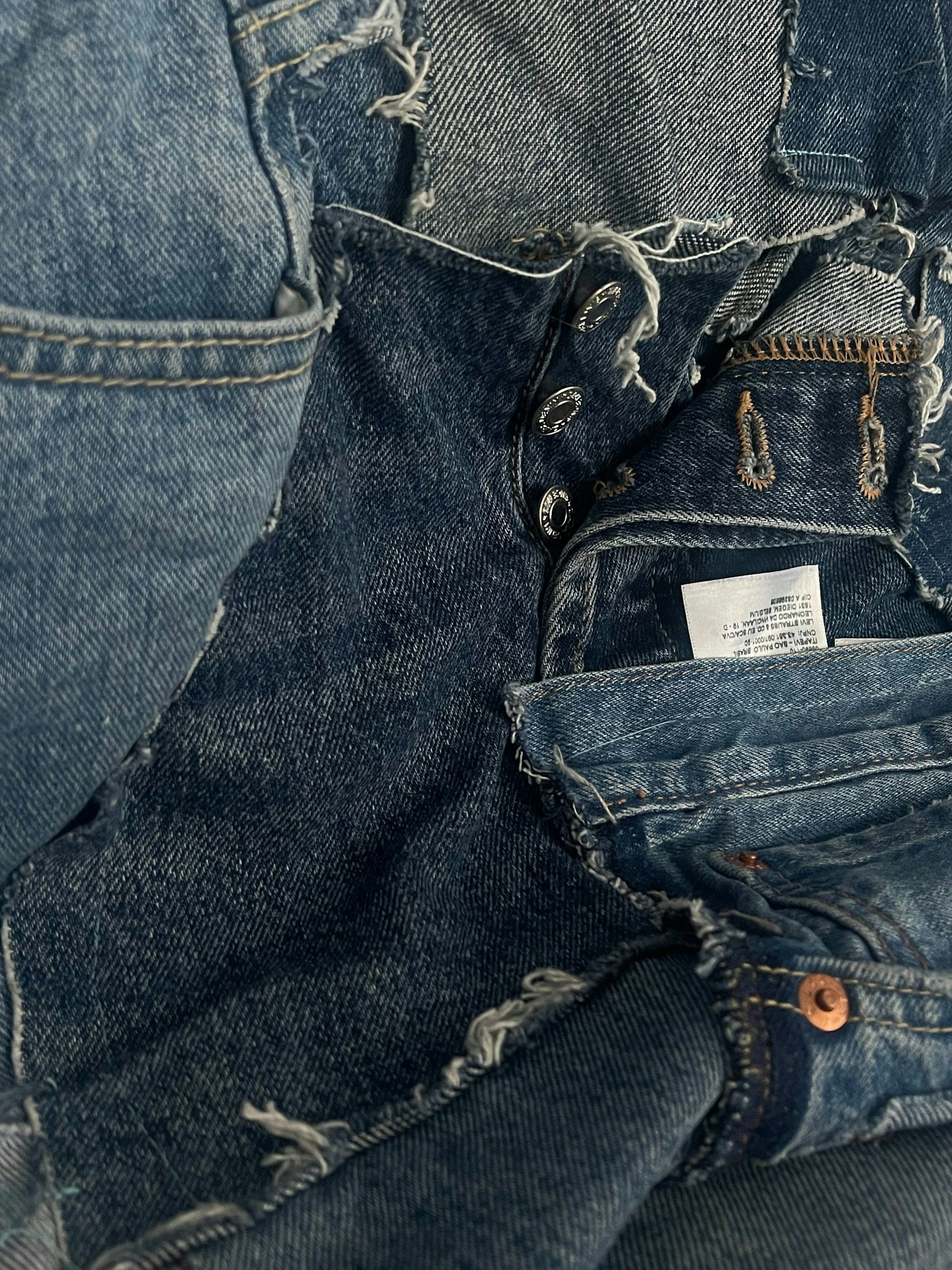
Blue Genes garments are created using donated or recovered denim. Each piece is individually designed and custom fitted, responding to the wearer’s body, style, and story. No templates. No repeats. No copies.
The process is collaborative and slow, prioritising artistic excellence, material reuse, and ethical production. What emerges is not a product line but a growing collection of singular works, each carrying its own history and future.
Why Denim?
Denim is one of the most common and environmentally costly textiles in the global fashion industry.
In Australia alone, more than 200,000 tonnes of clothing enter landfill each year.
Blue Genes treats denim as both problem and possibility, asking how waste materials can be reimagined as valuable cultural objects rather than disposable goods.
Lead Artist
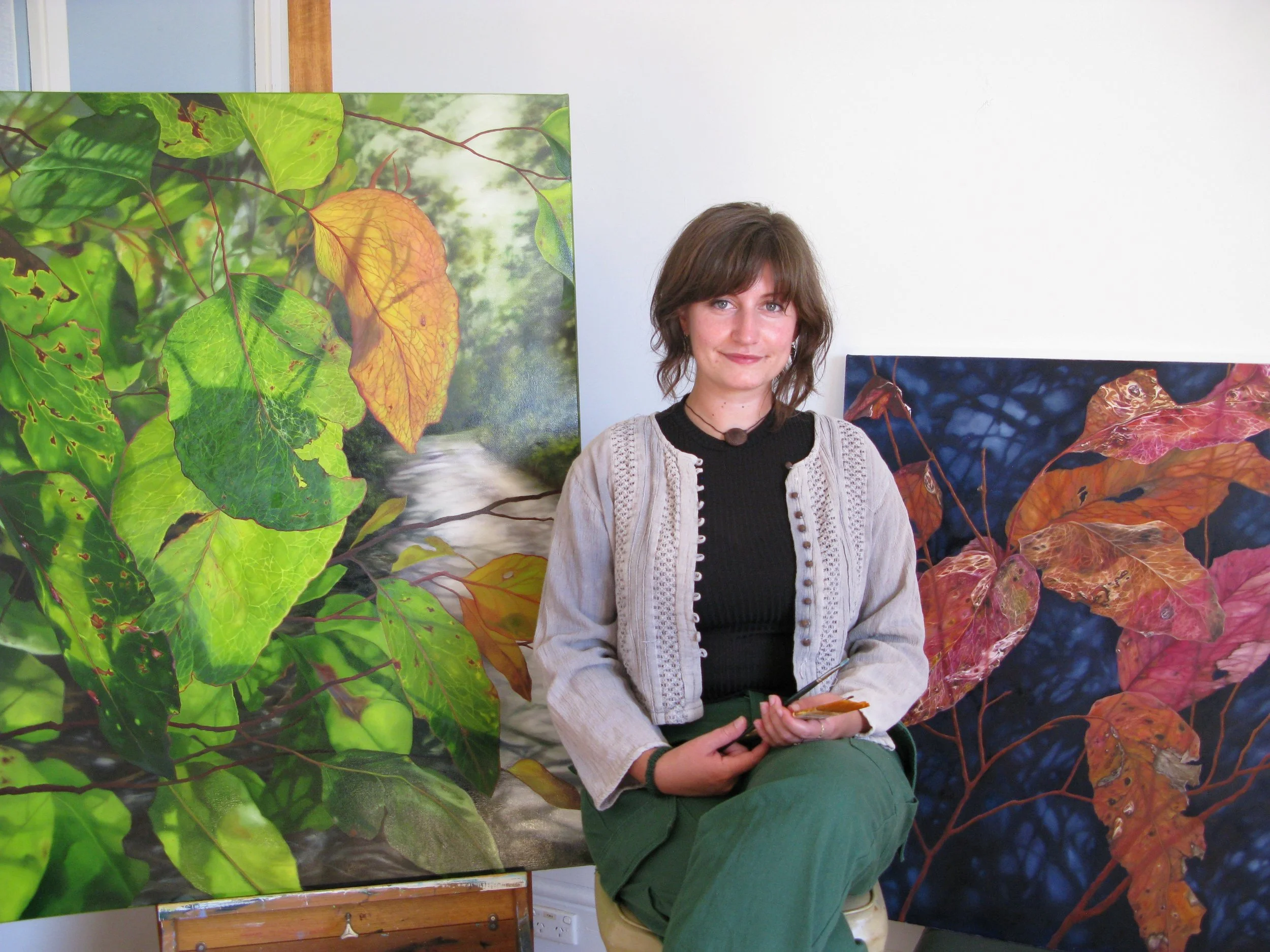
Maggie May Jeffries
Maggie Jeffries is a Tasmanian visual artist whose practice explores material memory, repair and care. Working across painting and textile-based processes, her work is driven by an interest in surfaces that hold history and objects shaped by human use.
For Blue Genes, Maggie approaches denim as both canvas and archive. Wear, fading, and imperfection are not erased but activated, allowing each garment to retain its past while taking on a new form. Her practice aligns sustainability with beauty and process with dignity, making Blue Genes as much about how something is made as what it becomes.
Status
Blue Genes is in active development, with commissions, partnerships, and exhibition pathways unfolding toward 2027.
Follow along as old jeans find new lives, and fashion remembers how to mean something again.
Follow the journey
Interested in a commission, collaboration, or sponsorship?
Get in touch and join the Blue Genes story.