The Ecosystem of the Arts: Connection and Transformation
By Kelly Drummond Cawthon, SEE Creative Director.
There’s a myth in the arts that progress is a ladder, a hierarchy to when people should be given opportunities based on assumed experience or time served. Emerging to mid-career to established. But a practicing artist or arts worker knows the process doesn’t move in a single trajectory or skill set. It connects us. Students become teachers, artists become collaborators, and mentors become peers. Knowledge circulates, adapts and comes back transformed.
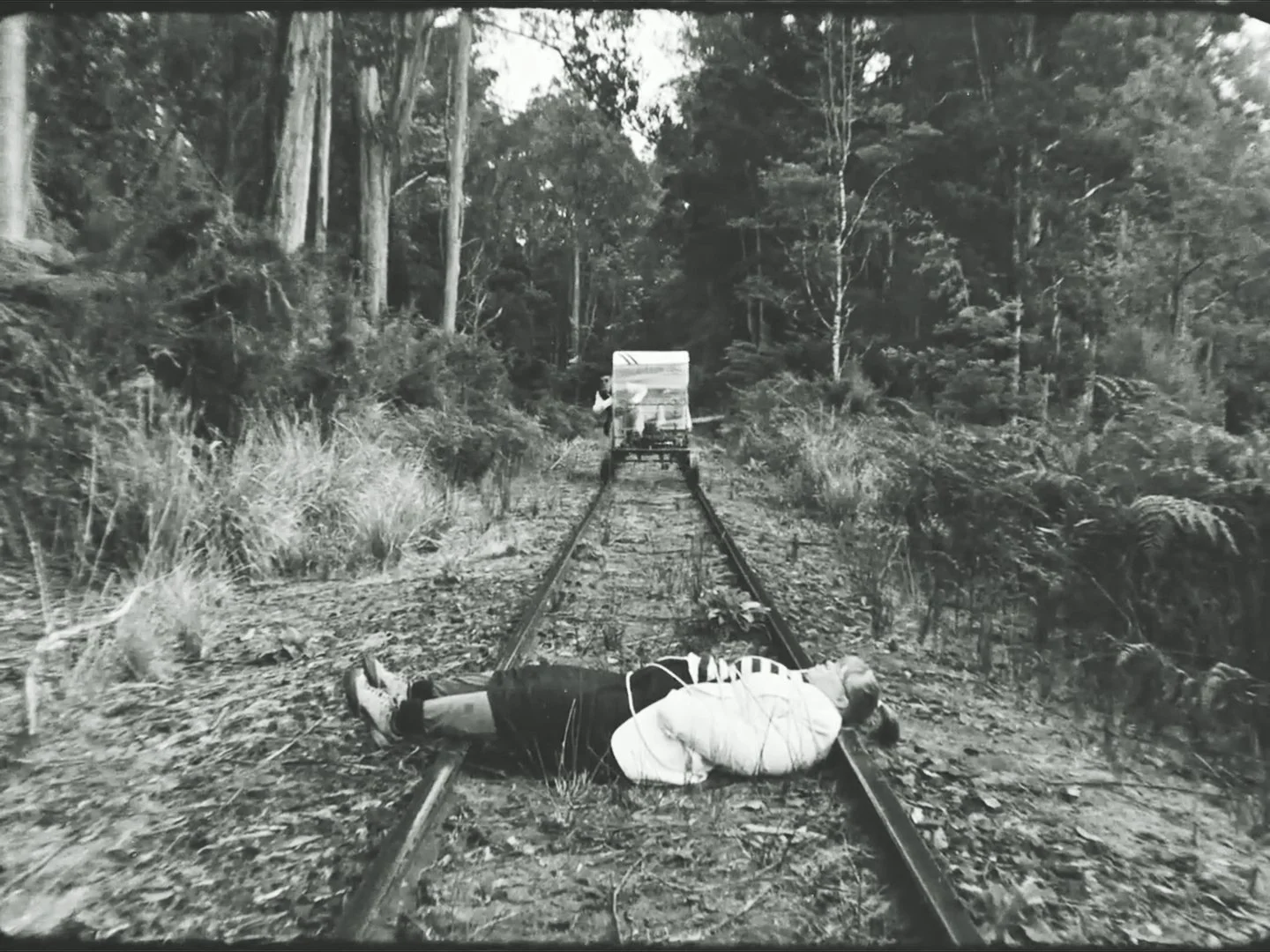
Still from the short film Relâche – The Last Dance on Earth, featuring Elise Romaszko and Michael Fortescue.
Right now, our film Relâche – The Last Dance on Earth is screening at the Liminal Dance Film Festival in Washington, D.C., placing a disability-led Tasmanian work on an international stage. This film has already reached audiences in Australia and Europe yet it is a significant moment for the artists involved and for our practice as the work we create is not simply about producing outcomes. It is about what sits underneath that moment which is a longer, slower and a more purposeful connection or loop.
For me, this is the work. Building conditions where knowledge can move, where artists can grow into each other’s practice, continue building on ideas together and where opportunity does not close behind you once you have completed a project. This intention requires a shift away from ownership towards a shared responsibility for the field.
What you invest in someone else’s practice does not disappear, it re-emerges, often years later and often in ways you could not have predicted.
The Directors of the Liminal Dance Festival, Colette Krogol and Matt Reeves, were students at the University of Florida in the 2000’s. During their studies I was on faculty there auditioning students for the Musical Theatre program in a year where I happened to be running the dance section for the first time.
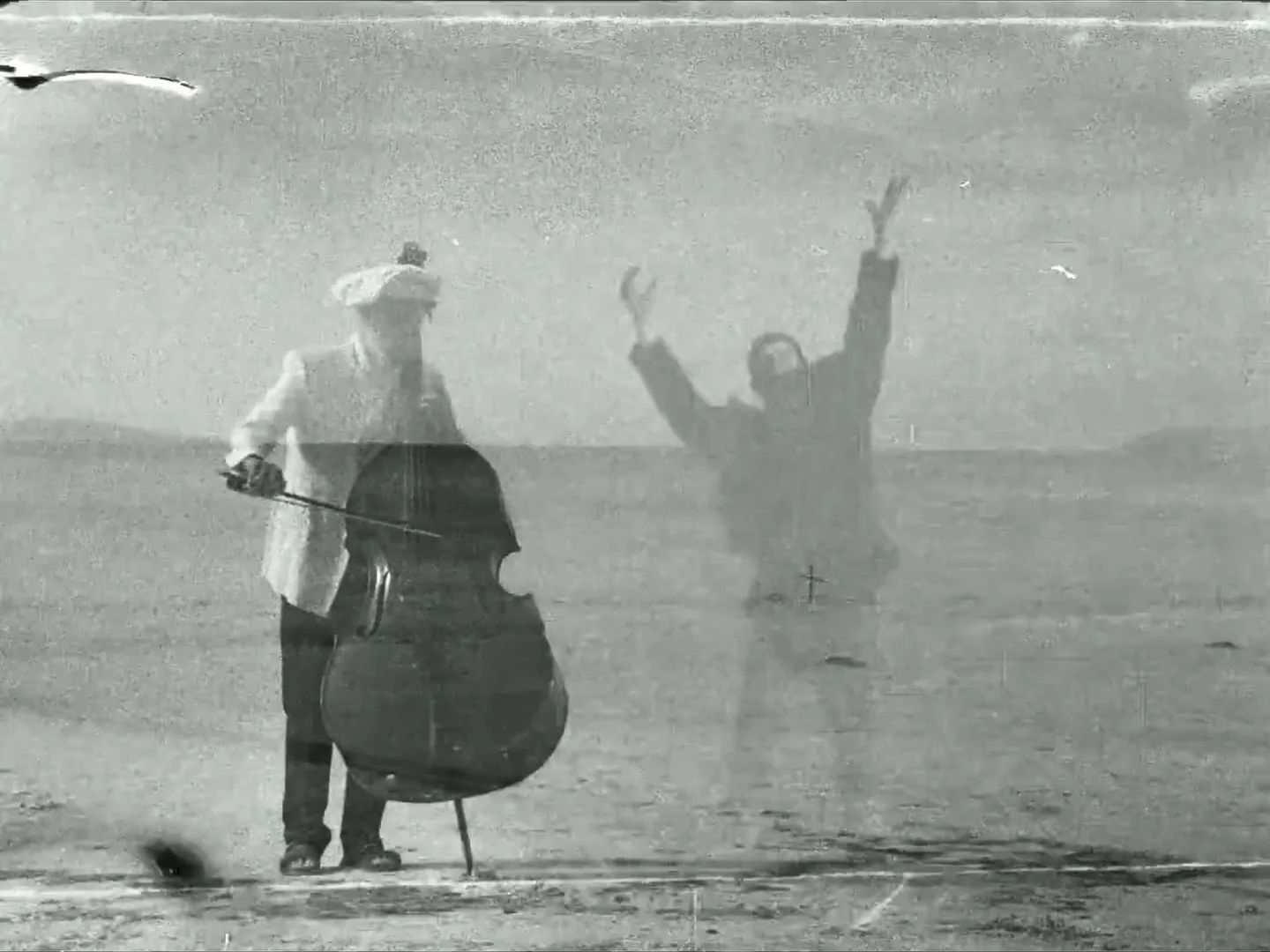
Still from the short film Relâche – The Last Dance on Earth, featuring William Webster and Michael Fortescue.
I met Matt during an audition, we spoke about what he was doing and what he wanted to do next, including his physical experiences and, to my surprise, a history of pole vaulting. Whilst he was not accepted into the musical theatre program I recognised a body already holding knowledge with strength, timing and risk and it's what made me recruit him into the BFA Dance Program.
Colette also arrived ready for the work. As a freshman, she earned her place in the Department of Theatre and Dance Performance Ensemble, the Florida MOD Project. To keep up with her we had to rewrite the rules from a two year to four year membership, usually reserved for juniors and seniors.
Not long after, I found myself dancing with Matt at the Harn Museum of Art, suspended high above marble in his first aerial performance. Fresh to dance but with a history of pole-vaulting we were able to build work within a new performance context utilising previous skillset and experience.
Over four years, we worked together, experimented and toured sharing methods. We built a language and learnt through practice which evolved through creative exchange. It isn’t about academic progression or hierarchy, it is the art practice becoming embodied knowledge.
While still at the university, Colette and Matt founded Orange Grove Dance, building a practice grounded in precision, risk and long-term collaboration. Their work now travels across stages, universities, and international contexts, recognised for its clarity of form and physical rigour.
And it is this same depth of inquiry that continues to evolve: from the first moments in the university dance studio, to Colette and Matt hosting our beloved film Relâche, in a festival shaped by artists I once worked alongside in a completely different context, I reflect on the success of the long term collaborations and creative dialogue we continue at Second Echo Ensemble.
Our creative interactions ask us to undo the hierarchy. We recognise that the creative development of the practitioner and of the work is not linear, that readiness is not determined by age or stage, and that access to opportunity should not be gate kept by inherited structures.
At Second Echo Ensemble, the task is not to climb, but to sustain an already precarious system. When we practice across an ecosystem, the field becomes more resilient, more inventive and more responsive to the people within it.
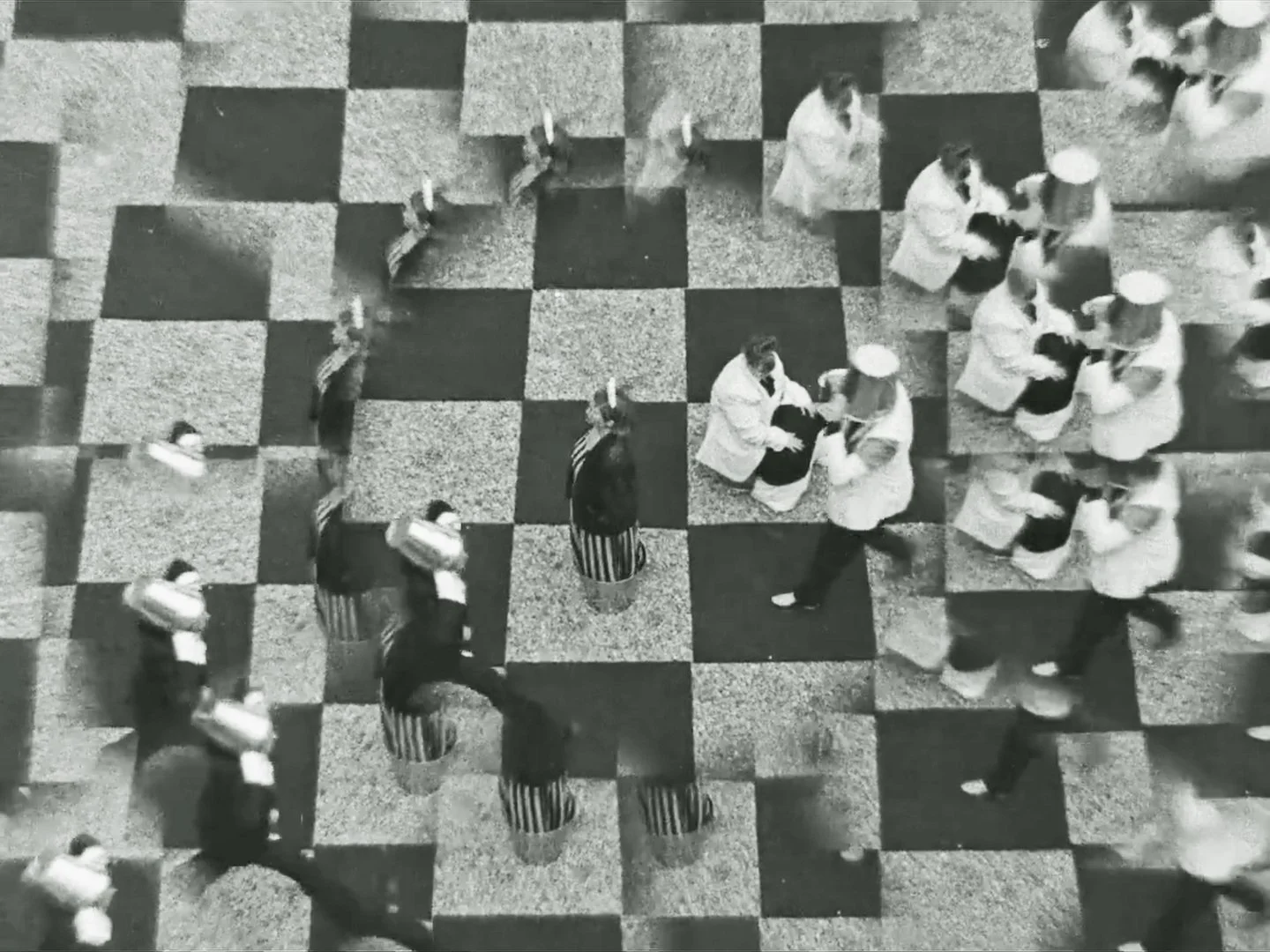
Still from the short film Relâche – The Last Dance on Earth, featuring Second Echo Ensemble.
What emerges is a continuous exchange, where knowledge evolves and returns in new forms. Where creating multiple entry points, sharing knowledge openly, and ensuring pathways remain porous rather than fixed, are accessible for all.
Relâche – The Last Dance on Earth is screening at the Liminal Dance Film Festival at Dance Place in Washington, D.C., a Live 3-day Event taking place on April 24-26, 2026.