Revive conversations from the beginning
When Second Echo Ensemble’s artist Elise Romaszko and creative director Kelly Drummond Cawthon returned from Canberra after a national consultation, around equity and the future of Revive, they reflected on the experience and what it means for disabled artists and arts workers.
The recent national consultation around equity and the future of Revive left us thinking about both what was present in the room, and what still feels missing.
For Elise, one of the most important parts of the gathering was simply being surrounded by other disabled artists and arts workers.
“I felt seen,” she said afterwards. “People understood me already. I didn’t have to explain everything.”
There was something powerful in that. A room full of people who understood the complexity of making art while constantly navigating systems that were not designed with us in mind.
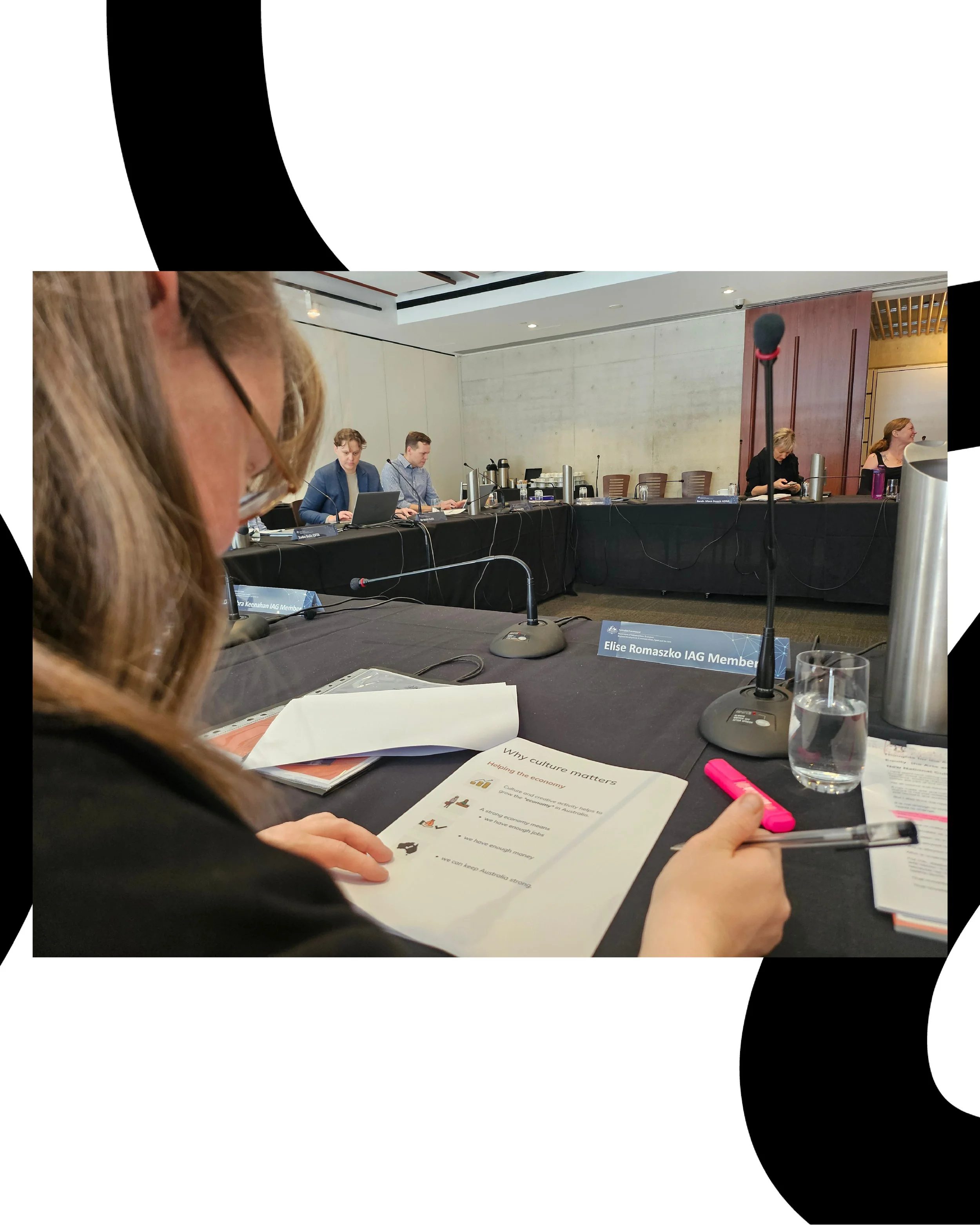
Elise reads over the notes. Meetings were held at the National Portrait Gallery, Canberra.
At the same time, both Elise and I found ourselves wanting the conversation to move beyond access alone.
Again and again, disabled artists are gathered together to discuss barriers, adjustments and inclusion. Those conversations remain necessary. Revive has opened important doors by recognising equity and access as central cultural issues. But there is also a danger that disabled artists become boxed into being consulted only about disability.
Not about art itself.
Not about artistic ambition.
Not about the future of culture in Australia more broadly.
Elise kept returning to a simple but important question: “Why don’t people ask us what art we want to make?”
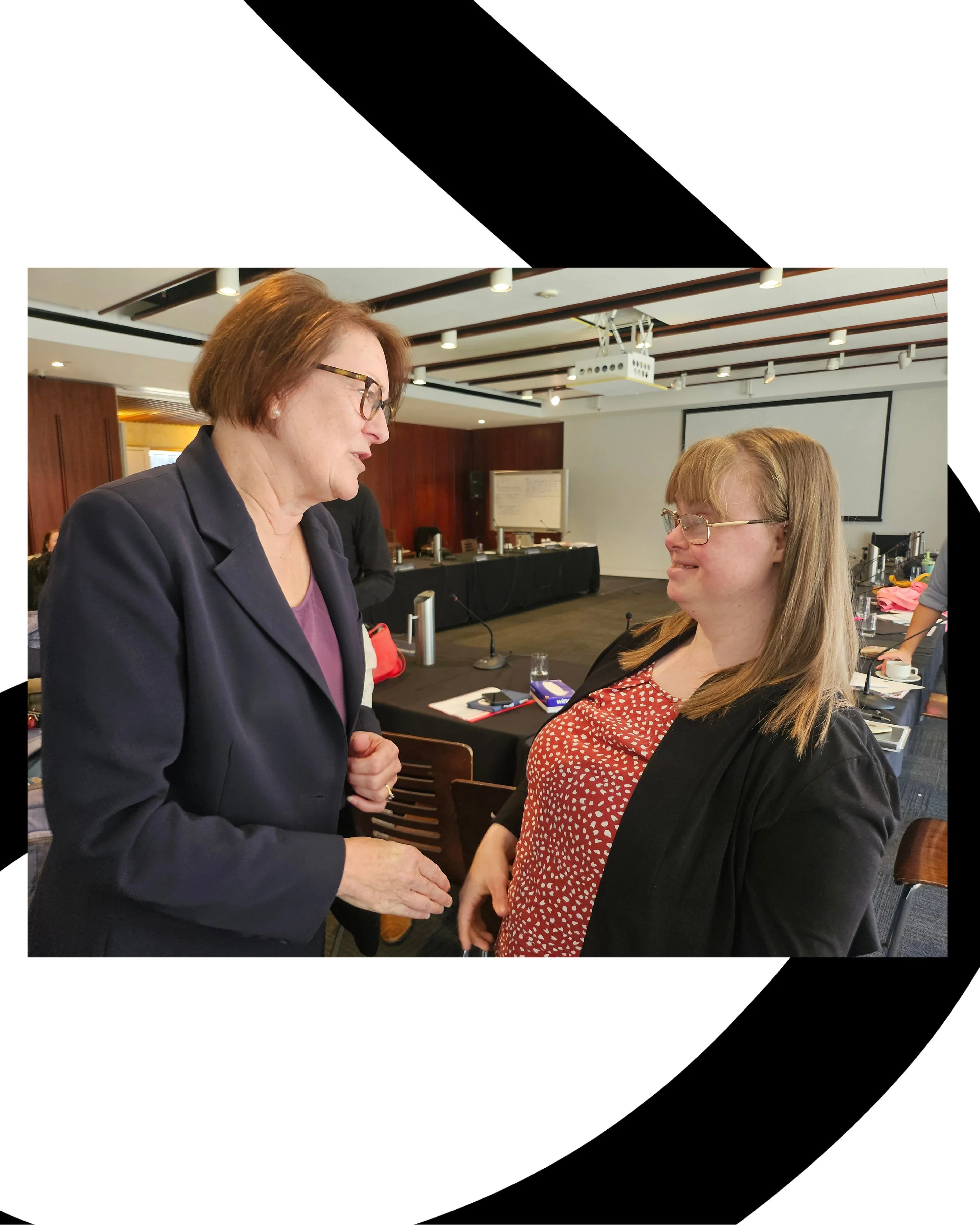
Elise Romaszko meets Susan Templeman MP, special envoy for the arts.
That question sat heavily with me throughout the consultation.
Too often, the conversation stays focused on retrofitting old systems. Trying to squeeze disabled artists into structures that were never built with us in mind in the first place. What if we spent more time imagining new models entirely? New ways of gathering, creating, leading and experiencing culture?
We were both interested in what a more hybrid conversation might look like. Not separating disabled artists into a single room to talk only about access, but bringing disabled artists into wider national conversations about creativity, public life and artistic vision from the beginning.
Disabled artists do not only bring knowledge about access. They bring deep artistic knowledge, new ways of seeing, and lived experiences that can reshape the cultural imagination of the country.
As Elise put it:
“We have ideas too. Big ideas.”
And perhaps that is the shift still waiting to happen.
Not simply asking how disabled artists can enter the cultural system, but recognising how disabled artists are already helping imagine what the future of that system could become.
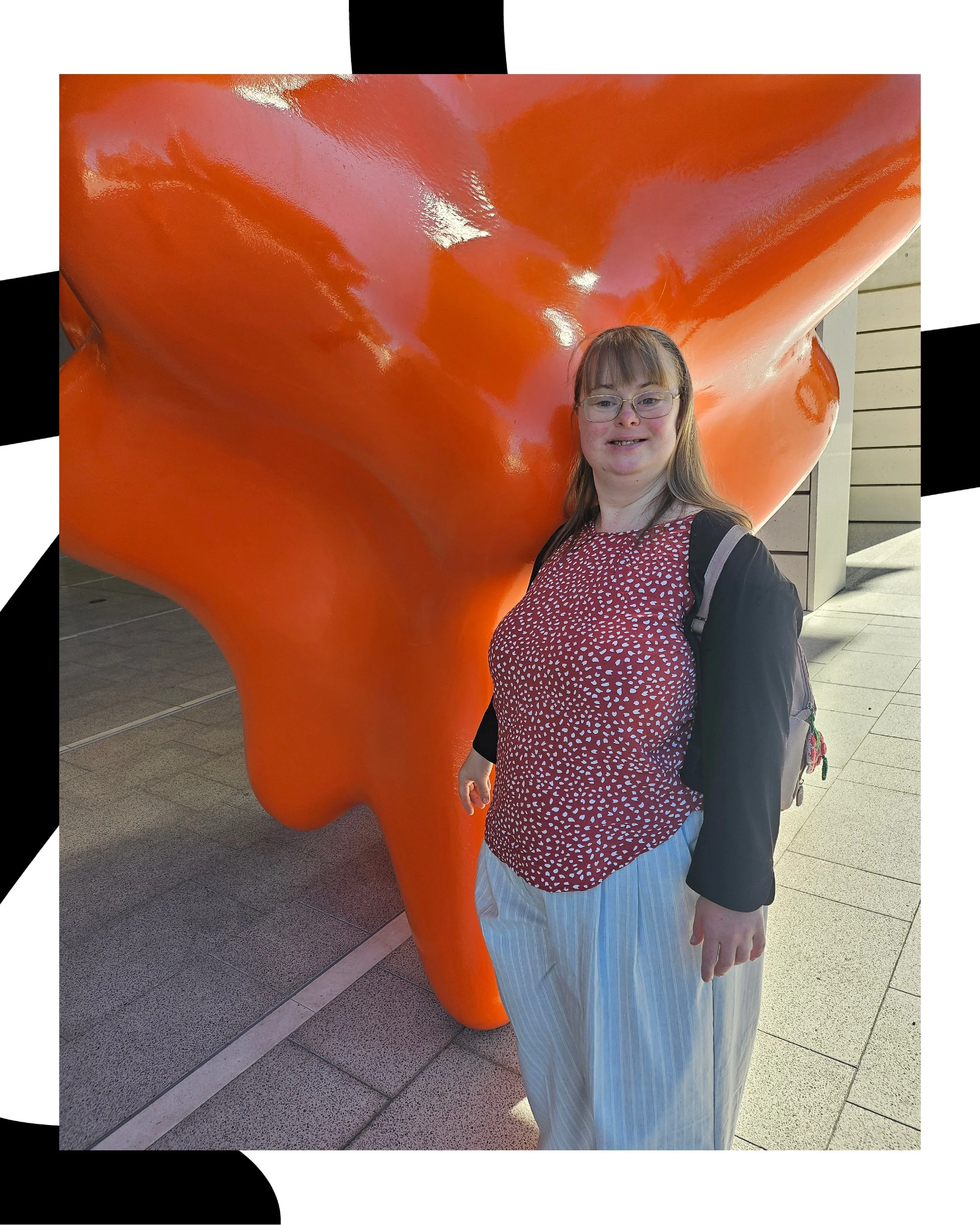
Elise Romaszko by a sculpture at the National Portrait Gallery, Canberra.
Revive is a landmark National Cultural Policy led by the Australian Government to renew and revive Australia’s arts, entertainment and cultural sector. SEE artist Luke John Campbell contributed to the development of the Plan, and Elise Romaszko is currently a member of the Implementation Advisory Body.